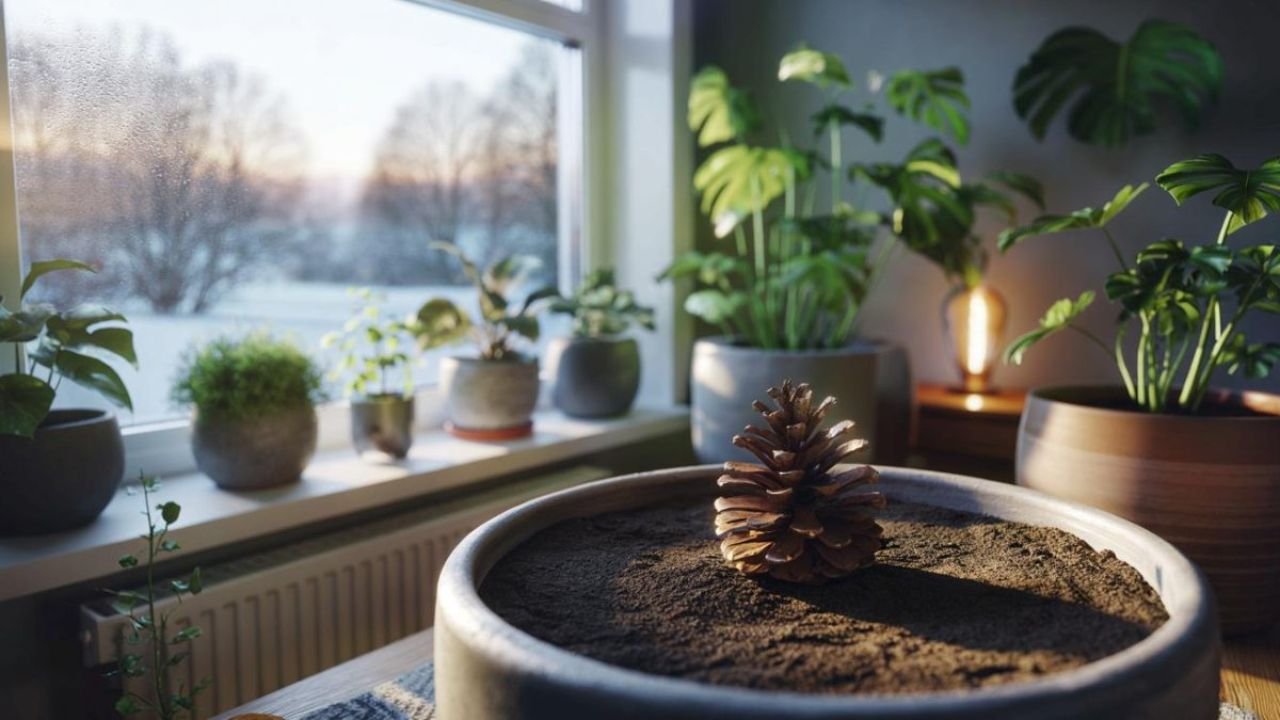
As winter tightens its grip and indoor heating dries out our homes, keeping houseplants healthy can feel like an uphill battle. Leaves wilt, colors fade, and even the most resilient plants seem to struggle. While the instinct is to reach for a quick-acting fertilizer, an age-old natural solution may be hiding in plain sight: the humble pine cone.
Used by gardeners for centuries, pine cones are more than decorative elements—they can actively support plant health, regulate humidity, and create optimal conditions for root growth during the harshest months. Understanding this simple yet powerful tool can transform your indoor gardening routine this winter.
Why Houseplants Struggle in Winter

The primary culprit behind winter plant decline is the combination of cold outdoor temperatures and indoor heating. Central heating systems pump hot, dry air into living spaces, drastically reducing humidity levels. While cozy for humans, this environment can stress plants, dehydrating roots and inhibiting nutrient absorption.
Common signs of winter stress include:
- Yellowing or browning leaves – often mistaken for nutrient deficiencies but usually a symptom of dehydration.
- Wilting or drooping foliage – a sign that roots cannot absorb sufficient moisture.
- Stunted growth – resulting from prolonged stress and poor nutrient uptake.
Overwatering or applying additional fertilizer during this period often worsens the problem, overwhelming stressed roots and promoting fungal or bacterial issues.
The Pine Cone Advantage

Pine cones offer a natural, low-maintenance solution to winter plant stress. Their unique structure allows them to act as self-regulating moisture sensors, releasing or conserving humidity based on the surrounding environment. This creates a stable microclimate that keeps plant roots hydrated and healthy.
How It Works
The pine cone’s scales are composed of cellulose and lignin, which respond dynamically to changes in air humidity:
- Dry air: The lignin contracts, opening the scales and releasing moisture into the environment.
- Humid air: The lignin expands, closing the scales to conserve moisture.
This natural mechanism functions as a slow-release humidifier, ensuring that plants maintain ideal moisture levels without frequent intervention. The result is healthier root systems, improved nutrient absorption, and reduced winter stress.
| Pine Cone Condition | Air Humidity Level | Impact on Plants |
|---|---|---|
| Scales Open | Dry | Increases humidity, supports root hydration |
| Scales Closed | Humid | Conserves moisture, prevents over-saturation |
Preparing Pine Cones for Indoor Use

To safely harness the pine cone’s benefits, it’s essential to prepare them properly:
- Collect from natural, untreated areas – parks or forests are ideal; avoid roadsides exposed to pollutants.
- Clean thoroughly – soak in a diluted bleach solution (1 part bleach to 10 parts water) for 15 minutes to eliminate fungi, bacteria, or pests.
- Rinse and dry completely – ensure no residue remains before placing near plants.
A few pine cones per plant are typically sufficient to maintain humidity, though the exact number can be adjusted depending on plant size and room conditions.
Why Pine Cones “Feed” Plants Better Than Fertilizer
Unlike conventional fertilizers that deliver a rapid but temporary nutrient boost, pine cones address the root cause of winter plant stress: inadequate moisture and environmental imbalance. By regulating humidity, pine cones enable roots to absorb water and nutrients efficiently, reducing the risk of nutrient deficiencies and enhancing overall plant resilience.
This slow, sustainable support mimics natural conditions, encouraging healthy growth without the spikes or crashes associated with chemical fertilizers. For winter-weary houseplants, this gentle, self-regulating approach can make all the difference.
Practical Winter Guidelines for Indoor Gardening
While pine cones are highly effective, they work best when combined with other winter care strategies:
- Optimal light: Position plants near windows or areas with maximum natural light.
- Consistent temperature: Avoid placing plants near radiators or vents that emit hot, dry air.
- Adjusted watering: Water less frequently, as evaporation rates are lower in winter.
- Plant grouping: Group plants together to create a mini humidity zone and natural insulation.
- Additional moisture aids: Pebble trays or occasional misting can complement the pine cone’s effects.
Understanding Dormancy and Its Importance
Many houseplants enter a semi-dormant state during winter, slowing growth to conserve energy. During this phase, maintaining balanced moisture and humidity is critical to preventing stress and supporting long-term health. Pine cones naturally assist in this process, sustaining the plant’s essential structures without overwatering or excessive fertilization.
Real-World Impact
Plant enthusiasts have reported remarkable results using pine cones:
“I had a ficus that was wilting despite all my care. After placing a couple of pine cones around it, the leaves perked up, the stems straightened, and the plant thrived all winter,” recalls Emily Wilkins, avid indoor gardener.
From succulents to orchids, and even high-maintenance tropical plants like monstera or fiddle-leaf figs, pine cones help maintain a stable microclimate that keeps winter challenges at bay.
Complementary Low-Tech Allies
Other natural techniques can enhance the pine cone’s effectiveness:
- Grouping plants to boost ambient humidity
- Misting leaves for targeted hydration
- Pebble trays to increase moisture levels
- Small energy-efficient humidifiers for extreme dryness
By combining these strategies with the pine cone’s self-regulating properties, indoor gardens can flourish even in the coldest months.
A Timeless, Sustainable Solution
Pine cones are more than seasonal décor—they are a natural, low-maintenance ally for indoor gardeners, providing slow-release humidity, protecting roots, and reducing dependence on chemical fertilizers. Embracing this ancient wisdom allows houseplants to thrive sustainably, turning winter from a period of struggle into a season of quiet vitality.